

Namibia is a country located in southern Africa, bordered by South Africa, Angola, and Botswana. It is a land of captivating and diverse landscapes, ranging from the deserts of the Namib and the Kalahari to the lush forests of the Owambo and Caprivi Strip.
Home to some of the oldest known archaeological sites in Africa, including the Brandberg and Twyfelfontein, Namibia is a land steeped in history and legend. With its abundance of national parks and reserves, most notably Etosha National Park, which houses magnificent wildlife, Namibia is a popular tourist destination for those interested in experiencing the grandeur of Africa’s vistas firsthand.
Articles
No post found!
Namibia Info & Stats

2.5 million
825,615 km2
3.7/km2
$30 billion
Republic of NamibiaRepubliek van Namibië
At a Glance
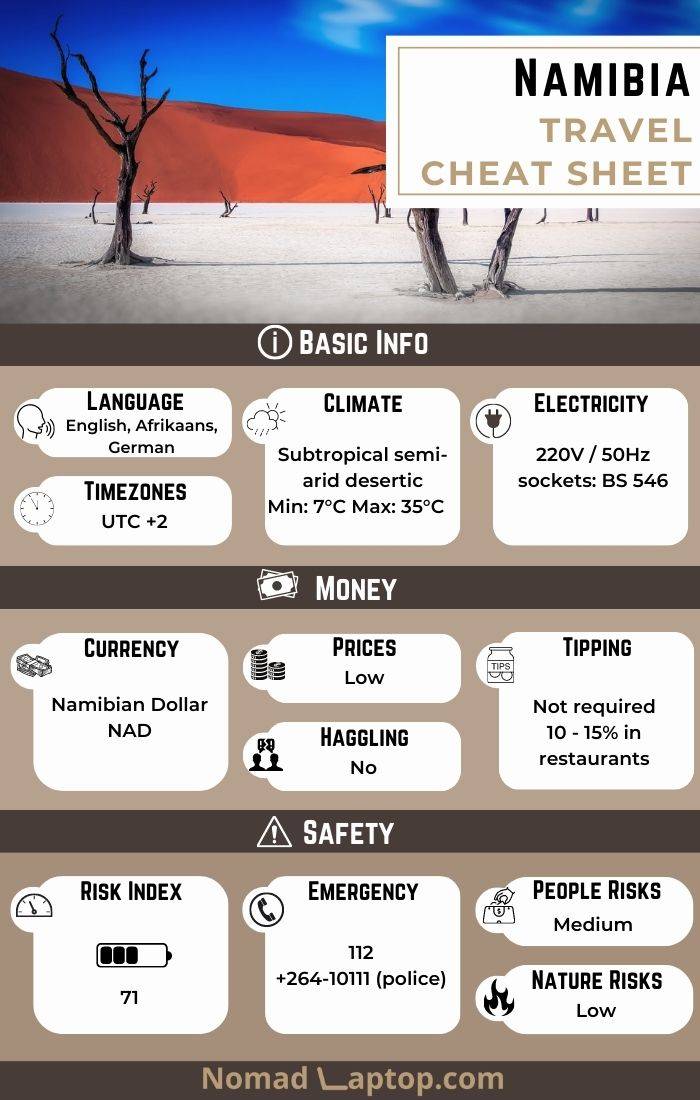
- Language: English (and Afrikaans or German)
- Population: 2,777,232 (2023 est.)
- Timezone: UTC +2
- Political System: Multi-party parliamentary democracy
- Ethnic Groups: Afrikaner, German, and Herero
- Religions: Christianity Islam, Hinduism, and Judaism
- Currency: Namibian dollar (NAD)
- Credit Cards: Credit cards are widely accepted
- Electricity: 220 volt / 50 hertz (BS 546)
- Tipping Customs: 10-15% in restaurants and bars
- Haggling Culture: Not common
Climate & Seasons
Namibia has a semi-arid climate, which is characterized by hot summers and mild winters. Summer temperatures are generally hot, with average highs ranging from 25°C (77 °F) in the cooler southern regions to 32°C (90°F) in the north. During the winter, temperatures are mild, ranging from 10°C (50°F) in the south to 22°C (72°F) in the north. Rainfall in Namibia is sparse, with the northern and eastern parts of the country receiving just 200mm of rain a year. Most of the rain falls from December to March, and the country has a distinct dry season. Daytime temperatures are typically hot and sunny throughout the year, and humidity is low. The Namib Desert, located in the southern region of the country, is one of the driest and hottest areas in the country and one of the largest in the world.
Entry Requirements
Namibia has fairly easy entry restrictions as can be seen from the below map. Countries which are not in green will need a visa from the Namibian consulate in their country of origin
Click the map to see details on visa requirements for each country
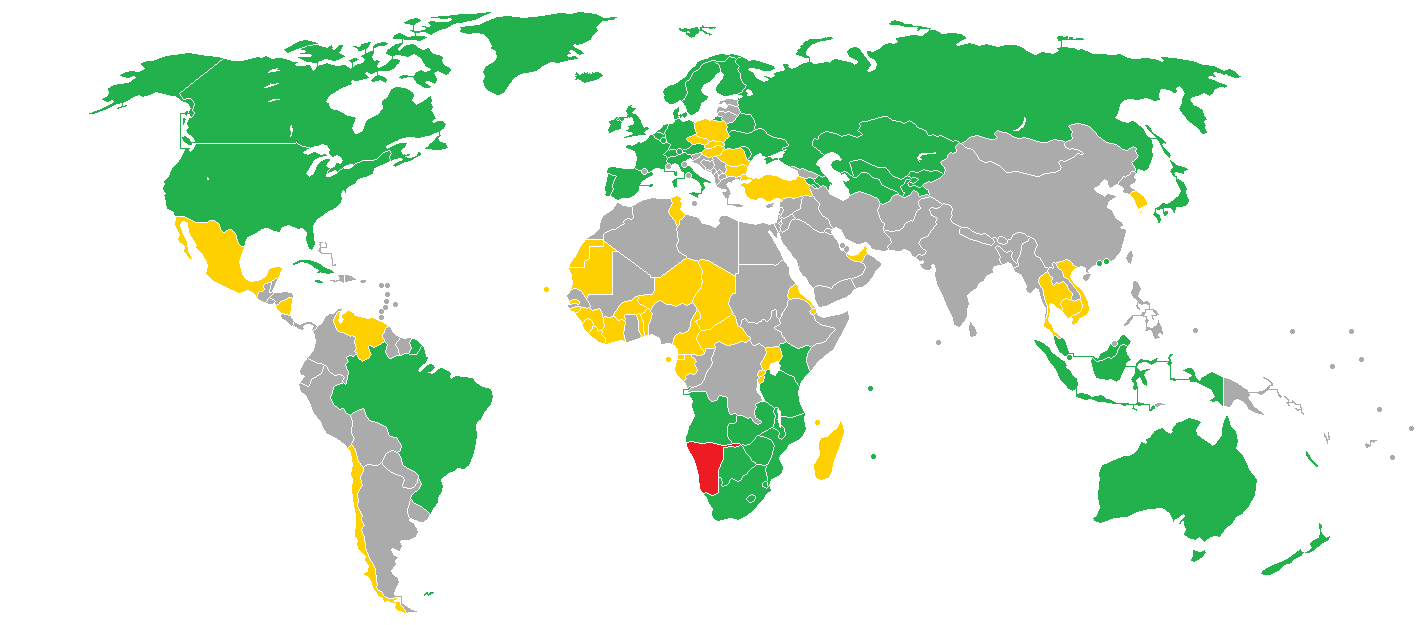
Alternatively, input your passport citizenship and quickly see the requirements that apply to you:
Safety
Safety: Namibia is a stable country politically and there are no risks of terrorism or social unrest. The country, however, does pose risks to foreigners and visitors, especially in the capital, Windhoek, where muggings, bag snatching, and pickpocketing are very common. Scams are also present but not to a high degree. Overall, it can be considered safe but there are some areas and times that should be avoided.
Natural risks: As other countries have a strong presence of wildlife, animal attacks may potentially be an issue. Otherwise, there aren’t many natural threats in the country, with most risks given by the arid climate, such as droughts, fires, and sudden floods.
Emergencies number: 112, +264-10111 (police)
Safety Indices
Learn more on the data source and the methodologies of ranking in the Global Safety Indices page.