

The Kingdom of Cambodia, is a country steeped in deep culture and breathtaking natural beauty. It has a rich history given by events such as the emergence of the Khmer Empire, one of the most powerful empires in Southeast Asia during the 9th to 15th centuries, the French colonialism period that left lasting impacts to this day, and the subsequent tragic period under the Khmer Rouge regime from 1975 to 1979.
From the bustling markets and French colonial architecture of Phnom Penh to the serene landscapes of the Mekong River and Tonle Sap Lake, Cambodia is a country that beckons to be explored and understood through its history, culture, and people.


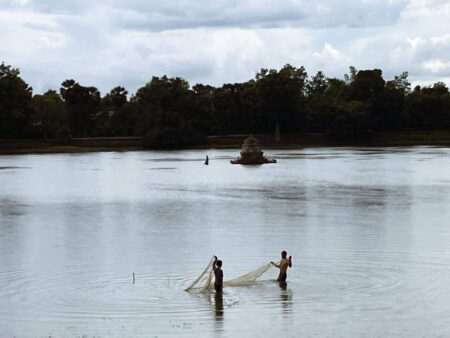


The biggest tourist attraction in the country is the region near Siem Reap, with the wonders of the ancient Khmer temples and the famous Angkor Wat temple. The temple is the largest religious monument in the world and it accounts for half of all tourism in the whole country. The whole Angkor complex surrounding Angkor Wat may arguably be even better, so a visit to this wonderful part is sure to not disappoint.
The country is also a common destination for backpackers and traveling through the country’s jungles and rivers is sure to provide a wonderful adventurous experience.
Articles

Cambodia Info & Stats

17 million
181,035 km2
94/km2
$106 billion
ព្រះរាជាណាចក្រកម្ពុជា
Preăh Réachéanachâkr Kâmpŭchéa
At A Glance
- Language: Khmer is the official language.
- Population: 16,449,519 (est. 2018)
- Timezone: UTC +7
- Ethnic Groups: Khmer 90%, Vietnamese 5%, Chinese 1%, other 4%
- Political System: Unitary semi-presidential constitutional monarchy
- Religions: Theravada Buddhist 95%, other 5%
- Currency: Cambodian Riel (KHD). US dollars are widely accepted
- Credit Cards: Except in upper-class hotels and high-end restaurants, cards are not always accepted. US dollars are accepted.
- Electricity: Socket types A, C, G, 230 volt / 50 hertz
- Tipping Customs: Not expected, but appreciated
- Haggling Culture: Common

Climate & Seasons
As in other regions of the tropics, the seasons are split more between the rainy and dry seasons than the four commonly known seasons.
Autumn and winter all the way to early spring (March, April) are the months that are favored by tourists, with temperatures remaining high and a drier climate. Archeological sites like Angkor Wat are assaulted by tourists during this season.
During the wet season, prices are lower but most importantly, the crowds in these places are fewer. The occasional rain showers arrive in the afternoon and are short-lived, so the cloudy skies may ruin a sunset photograph, but nothing more.
Entry Requirements
With the exception of neighboring countries, all travel to Cambodia requires a Visa on arrival
Click the map to see details on visa requirements for each country

Gorden Cheng, CC BY-SA 3.0, via Wikimedia Commons
Alternatively, input your passport citizenship and quickly see the requirements that apply to you:
Safety
Safety: Cambodia is quite safe. However, given the general poverty of the country, walking around at night may create nervousness, although pickpockets may be the major threat.
Natural risks: During the monsoon season flooding is a common issue particularly in the areas surrounding the mighty Mekong. Contrarily during the dry season, long periods of droughts affect the country. Also, while not as frequent as in some neighboring countries, Cambodia can still be affected by tropical storms and typhoons.
Emergencies number: 119 (emergency medical services), 117 (police), 118 (fire department)
Safety Indices
Learn more on the data source and the methodologies of ranking in the Global Safety Indices page.