

South America is a continent where the vibrance of life dances through lush rainforests, whispers across arid deserts, and echoes in the Andes’ majestic peaks. This extraordinary land beckons travelers with an allure that marries mystery and diversity, adventure and enchantment. From the heart of the Amazon—the world’s largest rainforest teeming with unparalleled biodiversity—to the stunning expanse of Patagonia’s glaciers, each step through South America unveils a tapestry woven from nature’s most magnificent threads.
The continent stretches over 6.9 million square miles, boasting a population rich in cultural heritage and linguistic diversity (aside from Spanish and Portuguese, there are over 600 indigenous languages).
Whether traversing the surreal salt flats of Bolivia, marveling at the thundering power of Iguazu Falls, or sailing through the labyrinthine waterways of the Galápagos Islands, South America offers endless wonders to discover.
Facts & Trivia
(updated 2021)
Lake Titicaca, the largest lake in South America and the highest navigable lake in the world, is located at the border of Bolivia and Peru and covers an area of 8,372 km2 (3,232 sq mi). It has an elevation of 3,811 m (12,508 ft) above sea level and is around 8,562 m (28,000 ft) long. Numerous islands are contained in the lake, some of which are populated
Located in Argentina, Aconcagua is the highest mountain of both South America and the Western Hemisphere. It stands a majestic 6,961 meters (22,837 feet) tall and is situated in the Andes mountain range. It ranks in second place of the world’s Seven Summits, the highest being Mount Everest in Asia. Aconcagua provides a challenge for proficient mountaineers, boasting an altitude that is much higher than other prominent peaks in Argentina, such as Cerro Cóndor at 4,570 meters (14,990 feet). Furthermore, it is one of the world’s largest non-technical mountains, providing climbers with one of the world’s most rewarding experiences.
The Amazon River is the largest river in the world by volume of water, stretching an astonishing 6,437 km (4,000 miles). It is the second longest river in the world, following the Nile. Additionally, the amount of water carried by the Amazon is significantly greater than that of the other 10 biggest rivers in the world combined. This vast expanse of water supports numerous species, making the river a thriving hub of biodiversity.
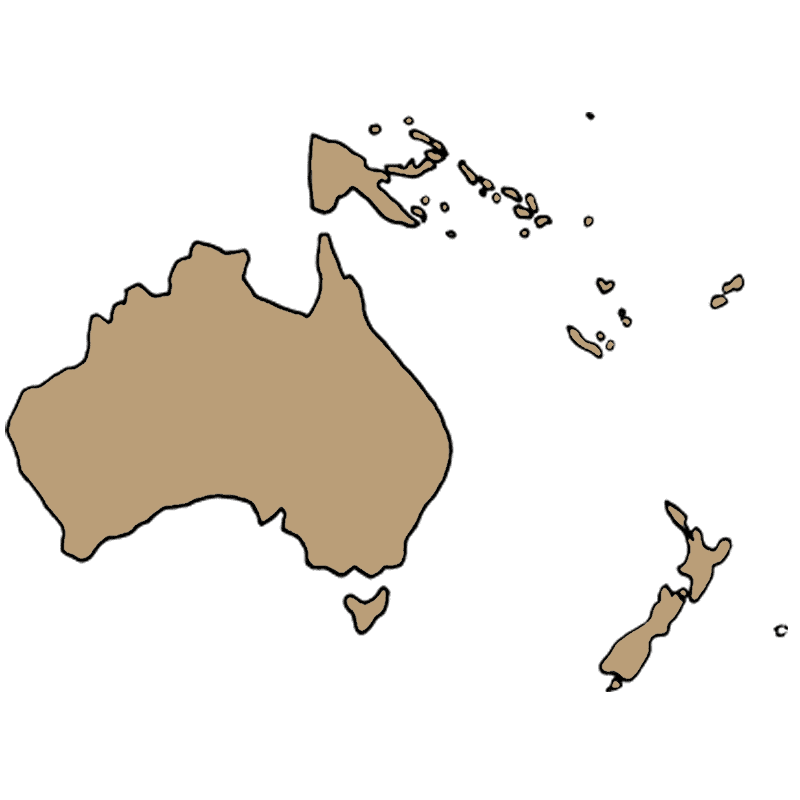
No surprise here. Australia is the largest island in Oceania, both in terms of size and population. Covering an area of 7,692,024 sq km, Australia is the sixth-largest country in the world. It is also home to 25.7 million people, making it the most populous Oceania country. Beyond its lush landscapes, deserts, and beaches, there are plenty of activities to explore in Australia, from friendly cities to World Heritage listed sites and national parks.
Most of the South American people are Catholics (90%), some Protestants, Jews, Hindus, Buddhists, and some indigenous people have their indigenous beliefs or traditions which date back centuries. These traditions are still strongly practiced in many countries throughout the region.
South America is home to some of the most diverse natural resources in the world. From minerals like iron ore and copper – commonly used to produce steel – to agricultural commodities like corn, wheat, soybean, cocoa, and coffee, the potential for economic growth in this spectacular region is immense. Additionally, South America is immensely rich in precious metals like gold and silver, and is a leading producer of many mining materials such as uranium, platinum, and rare earth metals.
The most populous city in South America is Sao Paulo. Almost half of the population of the South American continent lives in Brazil. With more than 22 million inhabitants (2021) Sao Paulo is also one of the ten biggest cities in the world, making it one of the most important cities in the continent. Other major cities in South America, such as Rio de Janeiro, Lima (Peru), Bogota (Colombia), Rio de Janeiro (Brazil), Santiago (Chile) and Buenos Aires (Argentina), also help contribute to the multifaceted landscape that makes up the fabric of South America’s culture.
- Macchu Picchu in Peru
- Iguazu Falls in Argentina/Brazil
- Angel Falls in Venezuela
- Rio de Janeiro and its Carnival in Brazil
- Patagonia in Argentina/Chile
- Amazon in Ecuador
- Pantanal in Paraguay/Brazil
- Torres del Paine National Park in Chile
The Atacama desert in Chile is one of the driest places in the world, receiving an average annual rainfall of just 0.6in (1.5 cm) and some parts of it have not seen rain for centuries. It stretches 600 miles (970 km) along the coast of South America and covers 40,541 square miles (105,000 square km), making it the world’s third largest desert after Antarctica and the Sahara. Despite its harsh environment, the Atacama desert is full of life – from the desert fox to the rare Howler monkeys.
- Atacama desert is the driest place in South America
- Angel Falls are the world’s highest waterfalls
- Amazon River Basin is the world’s largest river basin
- The Andes are the world’s longest mountain range
Safety indices
From the blog
Countries

All articles in South America

Browse other continents