




As anyone who has done a bit of travel planning knows, climate plays a big role when we take into consideration a particular destination. We all know that different areas offer different climates, but do we really know what a particular climate zone has to offer?
In this article, I will cover the characteristics of the major climate zones, what makes each one unique, and, most importantly for us travelers, the seasonal variations and how major countries and regions are impacted in their peak and off-seasons.
Contents
Naturally, there is a reason for peak seasons, and for foreigners, with their already short vacation periods, it is a matter of maximizing the benefit and visiting a place at its finest. However, the off-peak season has its advantages, and many places assume a completely different charm in the low season. For example, Greece, just before summer, retains its magnificent charm while having much cheaper prices. I visited Angkor Wat in May, experiencing the worst humidity I had ever felt, but very few crowds. The same thing happened in Tikal in Guatemala and generally in the Yucatan region in Mexico when I visited in late September: it was just before hurricane season, and I had to do long drives away from the coast when the tropical storm was intensifying and was about to hit the region. Despite the difficulties, all these ruins and archaeological sites were much more enjoyable precisely because of the fewer crowds and a somewhat more “genuine” experience. The temples assumed an even more spiritual quality and felt more “real.”
Be sure to check out also this article with a month-by-month breakdown of festivals, events, animal migrations, and seasonal highlights for various regions and popular destinations

The 3, 4, 5, 7, 30+ climate zones
From a high-level planetary perspective, Earth has three distinct and neatly separated zones: the largest, the Hadley Cell, which extends from the equator to 30/40 degrees; the two central Ferrel Cells; and the smallest, the northern or southern Polar Cells.
The complexity of Earth’s climate, though, requires many more separations. The current standard model that is used is the Köppen-Geiger climate classification, which uses the following five major climate zones, as can be seen in the figure:

- Type A: Tropical or equatorial climates
- Type B: Dry or arid climates
- Type C: Moderate or temperate climates
- Type D: Cold or continental climates
- Type E: Polar or extreme climates
- Type H: (Unclassified) highland climates
Each zone can contain subtypes, which themselves can contain other subtypes, amounting to more than 30 distinct classifications.

The definitions that will be used here, though, use a less precise separation into bands of four major zones, namely tropical, subtropical, temperate, and polar. Brief mentions will be given to some specific climates due to their popularity in tourism (such as the Mediterranean, Oceanic, Equatorial, and Arid).
The climate is extremely complex, and the four simple bands used here clearly do not represent the many nuances. While they may hold true for the extreme regions of the equator and poles, the middle regions have much more variability. Just a few examples: Most of the world’s deserts are located in the subtropical zone, which is characterized by humidity and, in some places, heavy rainfall. This is clearly not a characteristic of deserts, which are in fact classified as B: dry and arid in the Köppen-Geiger classification model.
Another example is the city of Naples, in Italy, which is at the same latitude as New York City and very close in latitude to Beijing, and these climates couldn’t be more different.
Also, differences between the northern and southern hemispheres will be discussed, but sometimes the southern hemisphere may be omitted, and often the northern hemisphere will be used as a reference (e.g., assuming summer is in July). This is not out of spite to our Aussie friends but for simplicity’s sake and because everything is specular (i.e. instead of going north to the pole, it’s south to the pole, instead of warm months in July, they are in December, etc.)
Seasons in the different zones
The first major distinction between climate zones is how each one experiences (or doesn’t) the common four seasons.
- In temperate and subpolar climates, there are four distinct seasons: spring, summer, fall, and winter. Although it is a simplification and not closely tied to astronomical observations, each season lasts exactly three months, with spring falling between March and May, summer between June and August, fall between September and November, and winter from December to February. This is for the northern hemisphere; the southern hemisphere is specular, with March – May being fall, June – August winter, September – November spring, and December – February summer.
- On the other hand, in tropical and equatorial climates, there are often just two seasons: wet and dry, or a monsoon season. The wet season generally corresponds to the spring and summer in temperate climates. Where monsoons are more prevalent, there are usually pre-monsoon seasons (basically spring), monsoons (summer) , and post-monsoon seasons (fall).
Monsoons are planetary, cyclical phenomena that affect most regions located in the tropics. In common parlance, monsoon refers to the wet monsoon that occurs over land and creates the wet season, although technically there are two, with the other one occurring over the oceans and being referred to as the dry season.
Monsoons develop from sea breezes caused by differences in temperatures between land and sea. During the warmer months, the land and oceans are heated, but the land increases in temperature more quickly. This creates low pressure in the atmosphere above land, causing air to flow from the cooler ocean. As the moist air from coming inland rises to altitude, it cools down and dries, and it becomes unable to hold the original amount of humidity. This leads to copious precipitation over land. The same process occurs inversely during the dry season, when the landmasses and oceans cool off, and by the same principle, the air over land cools off faster and, with its higher pressure, flows towards the ocean. The strong precipitations thus occur over oceans.
The major monsoons are the North and South American ones, the West and South East African, the Indian and Indo-Australian, and the famous East Asian monsoon.
- In polar climates, which are naturally cold, the main focus shifts from the actual temperature variations to the differences in the length of days and amount of daylight. Sub-polar climates also have four seasons, but spring and autumn are more transitional seasons between winter and summer. In pure polar climates, namely at the two poles, winters are prevalent, basically accounting for 9 months of the year, and are characterized by short, dark days. On the contrary, the three months of summer have constant days, with the sun never setting beyond the horizon. Officially, winter in the Arctic begins around October and lasts 6 months until April, whereas in Antarctica it begins in March and lasts until September.
(For a real-time and 3D view of the entire globe with weather patterns, winds, and temperatures, go to windy.com and select 3D from the sidebar)
The Temperate Zone

The temperate climate zone is located between the tropical and polar climates, so it corresponds to the middle latitudes of both hemispheres. As mentioned above, this zone features four distinct seasons, with warm summers and cold winters.
It is sometimes also referred to as continental, although in the Koppen-Geiger classification, these are two distinct zones, with temperate more related to regions close to seas and continental referring to landlocked regions.
The temperate zone encompasses a large portion of the globe, including the United States, Europe, Canada’s south side, some regions of South America, South Africa, East Asia, and Australia, and is where most people on Earth live (this is true for the northern hemisphere since, as can be seen from maps, the southern temperate zone is largely covered by oceans).
Seasons and peak periods

On average, winters in the temperate zone remain cold and dry, with temperatures below or around 0°C. Conversely, summers have higher precipitation levels, with temperatures typically between 10°C and 25°C.
Summers are usually the peak season for most countries in the temperate zone, followed by autumn and spring. Winters are usually a low season, but this depends on the specific destination. Clearly, popular mountain destinations such as the Alps in Europe or the Rockies in North America go in high season during the winter for their winter sports, as well as many major cities that light up for the December festivities.
Popular destinations
Europe
- Summer and Spring: Summertime is the busiest period throughout Europe. In most mild climates, watersports such as surfing can be done in just swimsuits or even just swimming costumes. Places like France, Spain, Italy, and Germany can become quite busy during the summer. Locals in cities like Madrid and Barcelona will take a break from their work and travel to beaches for the sun, sand, and sea. Mountain bikers and hikers also set their destinations for the Alps in Switzerland and France and the Pyrenees in Spain. However, very hot temperatures can be hard to take during the summer afternoons in countries such as Greece, Spain, and Italy. Spending nights at a plaza in these regions can be enjoyable, particularly for wine lovers.
- Winter and Fall: Despite being low season in several Mediterranean countries, many European cities remain alive with tourists during the winter due to the atmospheres they create. German cities with their charming Christmas markets, Paris with its romantic winter vibes, and iconic London with its ultra-busy shopping areas are just some of the destinations that attract millions of visitors despite the cold temperatures. To these are added the mountain destinations popular for winter sports, most notably all the ski resorts in the Alps, which clearly see a surge in visitors during this season.
North America
- Summer and Spring: In the US northern states and South Canada, the summers are warm yet tolerable outside of the heatwaves. Both New York and the Bay Area become vibrant places, with outdoor activities like Central Park and rooftop bars attracting people. Many decide to take a trip outside the cities to explore the countryside, forests, and parks. In the Pacific North-West, the greenery of the woodlands, combined with the beaches and blue waters, make for a picturesque summer. On the other hand, Southern California, Arizona, New Mexico, and Texas can become too hot in subtropical climates.
- Winter and Fall: The autumn months in New England, in the Northeastern United States, are known for their stunning array of vibrant fall foliage, drawing in numerous tourists. While the winter months can be chilly with heavy snow accumulations, places in the north, such as New York, Massachusetts, Michigan, Illinois, and all of Southern Canada, are typical snow zones, with skiers and snowboarders coming from all over to the American and Canadian Rockies. During the Christmas season, many cities become holiday hot spots, especially New York’s shopping districts and some of the more picturesque areas of towns like Boston and New England.
The Subtropical Zone

The subtropical zone is a relatively small zone located between the two tropics and the temperate zone. Subtropical climates are characterized by their hot and humid summers and mild winters, with temperatures that rarely fall below freezing.
This region encompasses Mexico’s northern and central areas, most of the United States’ southern states, the majority of northern, eastern, and southern Africa, the northeast section of Australia, the entirety of the Middle East, portions of India, and both Northern Vietnam and Thailand. However, as stated earlier, this zone is characterized by the largest amount of variability, with some regions falling under equatorial and others under temperate or continental climates, as well as arid.
Seasons and peak periods

The summer months can be hot and humid, while the winters tend to be mild though wet, and precipitation can be extreme in certain areas.
Subtropical climates generally feature four distinct seasons, and the temperatures and rainfall can vary significantly within each one. Some areas in the subtropics, though, are strongly influenced by the monsoons and thus, as described previously, have mostly only two distinct seasons, namely wet and dry.
- Springs in subtropical climates are generally quite mild and feature bright and sunny weather. As the days get longer, temperatures start to rise. Wildflowers often bloom during the spring months.
- Summers in subtropical climates are typically hot and humid. Temperatures during this season often reach well into the 30s Celsius. Rainfall can also be quite common during the summer months, with rainy days often accompanied by afternoon thunderstorms.
- As the weather starts to cool off, autumn brings pleasant days with mild temperatures. The days become shorter, and leaves begin to turn different colors.
- Winters in subtropical climates don’t tend to be very cold. Daytime temperatures usually stay above freezing, and snowfall is rare. Even so, temperatures can still drop and cause chillier nights.
In the northern hemisphere, the peak season in the tropical zone is typically the summer months of May through September when temperatures are high and there is little to no rain. Off-peak season in the tropics is typically from October through April. During this time, temperatures are milder, and there is usually more rainfall. All of the above is inverted for the southern hemisphere and places like northern Australia, South Africa, and the central parts of South America.
Popular destinations
South America
- Brazil and Northern Argentina are popular destinations located in the subtropical band, as well as the remote and secluded Rapa Nui/Easter Island. These destinations experience warm temperatures in the summer with high humidity (although coastal regions or Easter Island itself are heavily influenced by the oceanic currents). As mentioned above, the best times to visit are during the shoulder seasons of spring and autumn, when the rainfall is not as strong as during the summer, the weather is drier, and temperatures are pleasant.
Central America
- When traveling to the southern United States, in Florida, it is best to be prepared for a daily downpour and high levels of humidity from around May to October. For anyone wishing to visit Miami, the best time to visit is during mid-to-late spring, when temperatures are warm but bearable and the humidity levels have decreased.
- In Mexico City, the subtropical climate leads to warm temperatures peaking in the spring and mild winters. The west coast of Baja California has a Mediterranean climate, but the east coast is subtropical, humid, and more prone to thunderstorms and hurricanes. Therefore, it is important to be aware of hurricane season in the Gulf of Mexico, which is usually from June to November (more on this later).
Asia
- The best times to go to North Vietnam are during the spring or early fall months, as this avoids the extreme temperatures of the summer season as well as the rainy monsoon period of May to October. Winter brings mild, comfortable temperatures, with highs typically staying above 13°C during the day.
- In North Thailand, the hot weather is more intense, with temperatures in the high 30s °C seen in areas such as Chiang Mai. Traveling in the cooler months of November to February is usually the most attractive option here.
Australia and South Africa
- In Australia, the subtropical region is located mainly along the North-Eastern coast and includes notable places like the Gold Coast and the Sunshine Coast in the state of Queensland, where Brisbane is the capital. Characterized by the rainy and dry seasons, the weather in the summer is hot and humid, with temperatures reaching an average of 29°C in January and 21°C in July. With heavier amounts of rainfall in the summer, winter, and spring, these are the best times to visit this region for more comfortable temperatures. However, visitors should take precautions, as tropical cyclones can still occur in this area. Similarly, in South Africa, the subtropical area is mainly in the east, with large areas of grassland and bushland. Johannesburg and Durban, both of which experience mild, dry winters and hot, wet summers, are in this zone. Safaris in Kruger National Park are best taken in the dry season from May to October, when temperatures are cooler and vegetation is sparser, making wildlife spotting easier. Elephants migrate back to this region at the start of this season to take advantage of the winter conditions.
The Tropical Zone

The tropical zone lies between the equator and 23 degrees latitude north and south until the Tropic of Cancer and the Tropic of Capricorn respectively.
Temperatures remain constant and high throughout the year. This leads to very rich ecosystems such as savannas, wetlands, and rainforests.
Places in the tropical climate belt include Central America, large parts of Brazil, all parts of Central Africa, swathes of India, and areas of south and south-eastern Asia.
Seasons and peak periods

In tropical climates, seasonal changes are generally not significant between seasons, and the climates are generally humid all year. Seasons are typically divided into two distinct times: wet and dry, with the wet and monsoon season typically running from May to November and bringing intermittent, heavy downpours. The dry season runs from December to April, with sunny days and cool nights. This is the ideal time of year for beach activities and sightseeing. Both of these seasons are generally marked by extreme temperatures, though they will vary by region within the tropics.
Rainfall is abundant year-round in tropical climates, even during the dry season, with average rainfall between 1-2 mt in the wet seasons and 0.5–0.7 mt during the dry season.
Peak season for tropical climates is most definitely the dry season, when the influx of tourists from colder climates, looking to escape the cold weather and take advantage of year-round summer, is at its height. Winter time and the months leading up to it see the highest number of visitors, with travelers from the northern hemisphere coming from October to March and March to October for those in the southern hemisphere. Off-peak season sees a sharp drop in prices, and much fewer travelers visit.
A common danger that is characteristic of tropical zones are tropical depressions, which may lead to tropical storms.
When these increase in intensity, they become hurricanes, typhoons, and tropical cyclones. The difference in their names is purely geographic, and in the North Atlantic and Northeast Pacific oceans, the term ‘hurricane’ is used, whereas in the Northwest Pacific Ocean they are called ‘typhoons’, and the name ‘cyclone’ or ‘cyclonic storm’ is used in the South Pacific and Indian oceans.
Regardless of the name, they all start out as tropical depressions in warm oceans when the water vapor from the warm seas in the tropics or subtropics condenses to form clouds. As the amount of energy being fed increases, patterns of wind circulating around the center start to form.
The North Atlantic hurricane season runs from June 1 to November 30, while the typhoon season in the Northwest Pacific runs from June through October. The tropical cyclone season in the South Pacific runs from November to April, but in the Bay of Bengal and Arabian Sea, they usually occur between April and June and September to November. However, tropical storms can occur outside of these official seasons.
Popular destinations
Asia
- In Thailand, the rainy season occurs between June and October, which can make the already high humidity feel worse. July and August can be particularly uncomfortable due to high temperatures and potential rains. Conversely, the best time for tourists to visit is during the cool season, November to February, when the weather is pleasant and humidly lower. However, the eastern coast of the country experiences its own monsoon season, meaning visitors should be aware of potential rain.
- Visiting South Vietnam offers slightly better timing with regard to the monsoon season; however, March to May can be especially hot. The best time to visit is from December to February.
- India‘s sub-tropical regions, such as Goa, and Kerala, experience a tropical monsoon climate, so the best time to visit is the winter period, October to March, outside of the monsoon season and the highest temperatures.
South America
- Much of Brazil lies in the tropics, including the Amazon rainforest. The weather in Rio de Janeiro is very warm the whole year but exceptionally hot from December to February, while June and July are the city’s rainiest. If you would like to enjoy the sunny beaches, summer would be the perfect time to visit Rio; however, you may also want to avoid the Carnival season in February if crowds are not your thing and plan for the spring or autumn season from March to May or August to October. As for the Amazon, it has two distinct seasons: low-water from July to December and high-water from January to June. During the low-water season, river levels are lower, and you have more access to trails by foot. The climate is hot and humid throughout the year, so if you’re going for an activity like canoeing or hiking, make sure to research the season best for that activity.
The Polar Zone

The polar opposite of the equatorial zone (pun very much intended) consists of the ice caps, which is the pure polar region, and the tundra, which is sub-polar.
Vegetation is limited to lichens, mosses, and small shrubs. At the extreme polar zone, in places such as Antarctica and Greenland, temperatures remain below freezing all year, with no vegetation present, and is largely uninhabited by humans. The already relatively small number of people living in this zone remain in the sub-polar region in places in the northern tips of Europe, North America and Asia, and southern tips of South America.
Seasons and peak periods

In polar climates, the seasons are mainly distinguished by the amount of daylight rather than changes in temperature. Although the year consists of four distinct seasons—winter, spring, summer, and fall-winter is the predominant and longest season. Winter in polar climates is characterized by long periods of darkness and extreme cold temperatures. Snow and ice are common during this season, making outdoor activities difficult. Spring brings longer days of sunshine and warmer temperatures, melting the winter’s snow and ice and providing a welcome respite.
Despite summer being the best time to visit in terms of daylight and temperatures, peak season is during late winter until spring. This is primarily due to the higher chance to see the Aurora Borealis, or Northern Lights (or, Aurora Australis/Southern Lights for the southern hemisphere). In summer though, the presence of the midnight sun and the possibility to experience an entire day with sun during the summer solstice, is also considered a popular time for visitors. Off-peak season of spring to summer also sees visitors because of the more tolerable temperatures and less “sleepy” atmosphere, with nature itself timidly peaking through the ice cold snow and towns becomes more lively.
Popular destinations
Arctic and Antarctica
- Although still niche (and very expensive), tourism to the poles has seen an increase in popularity in recent years and parts of the Arctic and Antarctic are reachable and offer intriguing travel experiences.
South America
- In South America, in Patagonia, the Tierra del Fuego is a popular destination for travelers wishing to explore the “End of the World”, as well as being the closest and easiest way to travel to Antarctica.
Europe
- Northern Scandinavia is the best place to observe the Northern Lights from September to April. Norway’s Svalbard islands are also good for seeing polar bears, especially in April to September.
North America
- In North America, Canada and Greenland are top spots for wildlife sighting, particularly in the summer months of July and September, and especially for whale watching, which sees it’s peak in the summer due to the migrations of whales. The Northwest Passage in this region is only accessible by boat when the ice recedes in the summer.
Earth is a geoid and not a perfect sphere because of our planets’ rotation, which slightly flattens it. This means that at sea level at the equator, we are 6,378 km from the Earth’s centre, whereas at the poles, we would be standing 6,357 km away (a 21 km difference).
Assuming the entire mass of Earth is at its centre, this slight difference means that at the equator we are further away from Earth’s gravitational force. From Netwon’s gravitational laws, we know that the gravitational force is inversely proportional to the squared distance, so we experience less gravitational force pulling on us at the equator. This amount is 9.798 m/s2 times the mass of your body at the equator, whereas at the poles it is 9.863 m/s2.
On top of this, the other major force (although technically not a force) that acts on us is the centrifugal force of the spinning Earth. Centrifugal force counteracts gravity since it points outwards from the centre of rotation, effectively pushing us away from Earth. At the equator, it is strongest, where the maximum spin is perceived, amounting to 0.034 m/s2 acceleration, whereas it is zero at the poles, where there is no centrifugal force.
Combining these two (gravity minus centrifugal force) means that the total weight at sea level at the equator is therefore 9.764 m/s2 times your mass, whereas it is 9.863 m/s2 times your mass at the poles. A difference of almost 1%.
The Equatorial Zone
The equatorial climate zone is the central region of Earth near the equator within the tropical zone. This zone has high temperatures and the least amount of variability, with temperatures remaining warm all year round.
Precipitation is very abundant here, as the constantly hot, humid air releases its humidity as it rises in the atmosphere. Equatorial climates are rich in biodiversity, with many species unique to this region.
Seasons and peak periods

Despite the constant high temperature, the equator experiences also a dry and wet season, since it is the center of the tropical rain belt.
The wet season, occurring from April to October, brings high levels of precipitation and is usually the warmest part of the year. Heavy rains, strong thunderstorms, and even tropical storms or cyclones can occur. The dry season, which lasts from November to March, is generally cooler and much drier (relatively speaking) than the wet season.
As with the subtropical regions, the peak season and best time to visit is during the dry season, when the humidity and rainfall is (relatively) lower.
Popular destinations
Popular destinations that are located along the equator include Ecuador, Colombia, Brazil, Sao Tome & Principe, Gabon, the Republic of Congo, the Democratic Republic of the Congo, Uganda, Kenya, Somalia, the Maldives, Indonesia, and Kiribat.
- Kenya is possibly the most popular and visited of the Equatorial countries. June to October are the best months to visit because not only is the weather more bearable, but the main attractions, namely safaris, are better since there is very little vegetation, thus making it easier to spot the wildlife. That being said, in the summer months between July and September, the Great Wildebeest Migration occurs, one of the most breathtaking and impressive natural spectacles on the planet.
- The Maldives are best traveled to outside of the monsoon season, from November to April, while the shoulder season right after Easter provides fewer crowds and more moderate prices.
- The Amazon is best explored between the months of July and December, while the driest season from January to June may provide better access to hiking trails.
The widely known (or believed) fact that water in a drain swirls clockwise in the southern hemisphere and counter-clockwise in the northern hemisphere is not true. While, in theory, the physics do apply, the system of a common drain is so small that it cannot be influenced by the Coriolis effect. On the other hand, larger systems such as hurricanes do get influenced by this, and in fact, hurricanes in the northern hemisphere only spin counter-clockwise.
Other notable climate regions for tourism
Moving away from the simplistic classification of climates into bands, there are a few climate regions that are worth mentioning be it for their uniqueness or widespread extension.
The Arid climate
Arid climates are, by definition, characterized by being dry (but not necessarily hot). As such, vegetation is extremely sparse, with the soil barren from the lack of water, ultimately culminating in complete deserts. Rainfall may actually be considered a natural risk in these zones, as flash floods and landslides are common when these rare events occur.
Precipitation is the main defining factor, with some areas (such as the Atacama desert in Chile or parts of the Sahara desert in Libya) seeing less than 1 cm of rain annually.
We commonly think of arid desert climates as hot, and these are located primarily in the subtropical and tropical zones. In fact, many regions located in arid climates are consistently the hottest places on the planet. However, there are also cold desert climates located in temperate zones, such as in the Gobi Desert, which has temperatures in line with the rest of central Asia, or the Atacama Desert itself.
Deserts may be some of the most spectacular sights in the world. Visiting deserts means you should prepare for extremes: scorching heat during the day and below-freezing cold during the night.
The best time to visit these regions is outside of the summer months, typically during spring or fall, to slightly reduce the impact of the scorching sun.
Deserts become very cold fast during the nights. This is because sand cannot maintain temperature and needs constant heat from the Sun. When the sun sets, the sand particles rapidly lose heat. In addition, the lack of humidity in the air means that the radiated heat from the sand is not absorbed and instead quickly escapes. This all creates the typical situation of deserts quickly reaching freezing temperatures and even below freezing after the sun sets
The Mediterranean climate
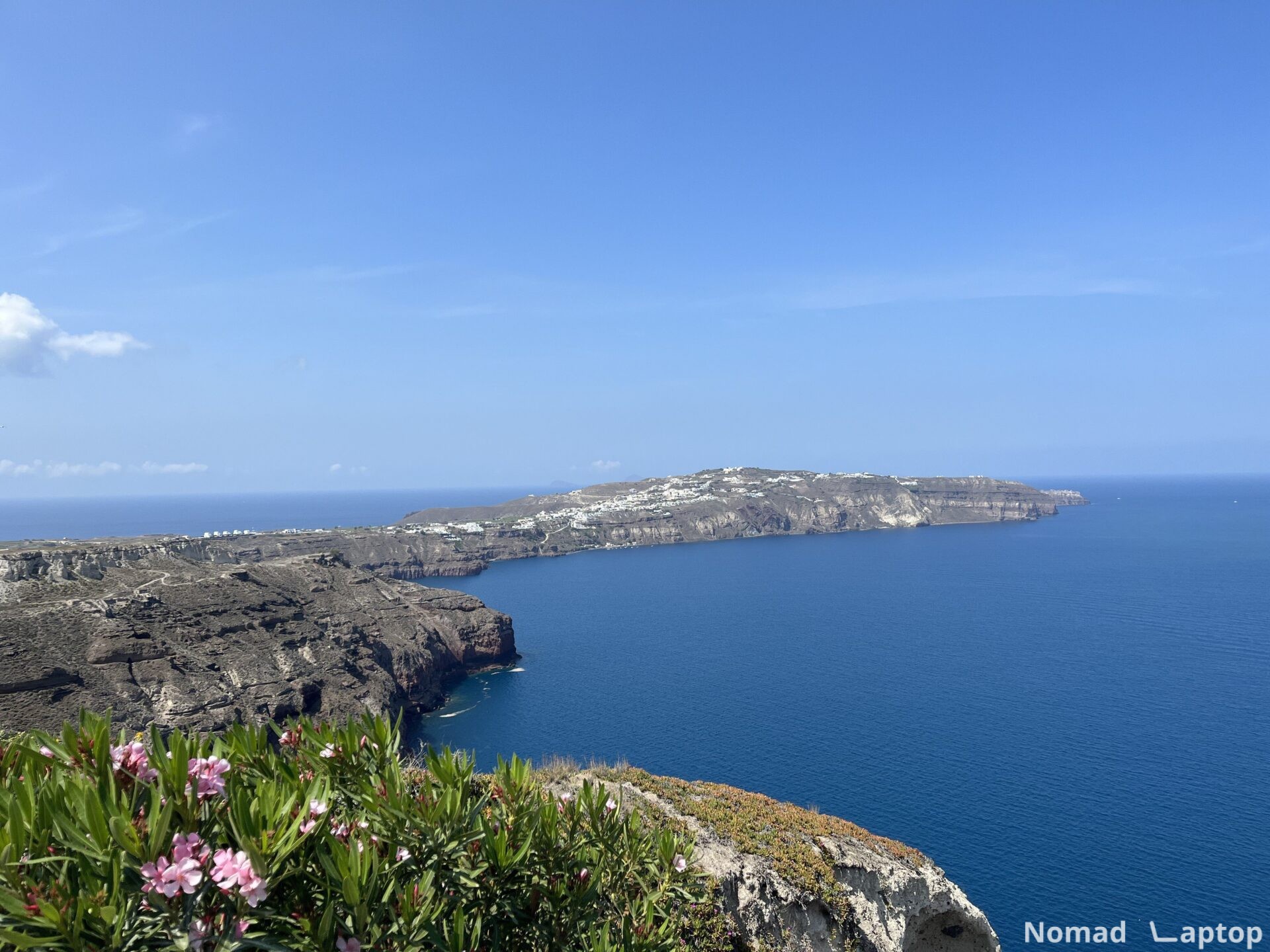
The Mediterranean climate zone is characterized by dry, hot summers and mild, wet winters. This climate type is found along the coasts of countries in the Mediterranean basin, including the countries of Spain, Portugal, France, Italy, Greece, and Turkey.
Despite the name, this climate is also found in parts of the western United States, such as California and the Pacific Northwest.
Mediterranean climates tend to have warm temperatures year-round, rarely ever dropping below 5 °C . Winters are mild, with temperatures rarely below freezing. Summers are hot and dry, with temperatures above 20 °C. Rainfall is generally seasonal, with most occurring in autumn and winter.
These temperatures and seasonal characteristics make these areas excellent for agriculture, leading to the iconic Mediterranean cuisine of olives, eggplants, tomatoes, etc.
Most countries in Europe in the Mediterranean zone are highly popular destinations for tourism, such as the French Riviera, Greek islands, the coasts of Spain, and the Italian hilly wine regions.
As for the general temperate zone, the best time to visit is between late spring and summer. Summer is definitely the peak season for these countries, and the influx of tourists reaches very high levels. Because the climate is agreeable most of the year, the shoulder seasons of spring and fall might be better times to visit because of the fewer crowds.
The Oceanic climate

The oceanic climate zone is similar to the Mediterranean climate but, as the name implies, has a stronger influence from oceans. It is also found at higher latitudes (between 45 – 63 degrees latitude), so it is generally colder. Regions affected by this climate are Northwestern Europe, Northwestern America, and New Zealand in the southern hemisphere. Temperatures tend to remain stable due to the influence of the oceans and rarely go below freezing. The areas are characterized by moderate rainfall, evenly distributed through the year. This makes these regions generally humid all year-round.
Summer is the best time to visit when the temperatures are more pleasant and rainfall is less frequent, allowing for a wide variety of outdoor activities.
The Humid Continental climate

Within the temperate zone, the humid continental climate zone is one of the most common climate types in the world. This climate zone is generally found in the interior regions of the Northern Hemisphere, including parts of North America, Europe, and Asia. The climate features more pronounced variations of temperatures and seasons, with warm, humid summers and cold, below-freezing, winters. There is also high precipitation and snowfall as well as frequent thunderstorms. Flora and Fauna of this zone is the “classic” forest with ferns, oaks and maples and animals such as deer, moose, hawks etc.
Final thoughts
Climate might be the most immediately striking aspect when we visit a foreign land. Visiting archaeological sites, modern cities, or national parks brimming with unique local species, all with their peculiar characteristics given by the weather of the place, is a testament to how diverse and astounding our planet is.
If you search online for the “best time to visit xx,” you will receive answers that consider the climate as the main factor, like in this post. However, as I mentioned at the beginning, reduced crowds and inherently lower prices are both strong incentives to visit a region during its low season. Even in very tourist-centric destinations, the locals and people in the industry are fewer and more laid-back and, at the same time, more forthcoming and serviceable towards the rarer visitor.

